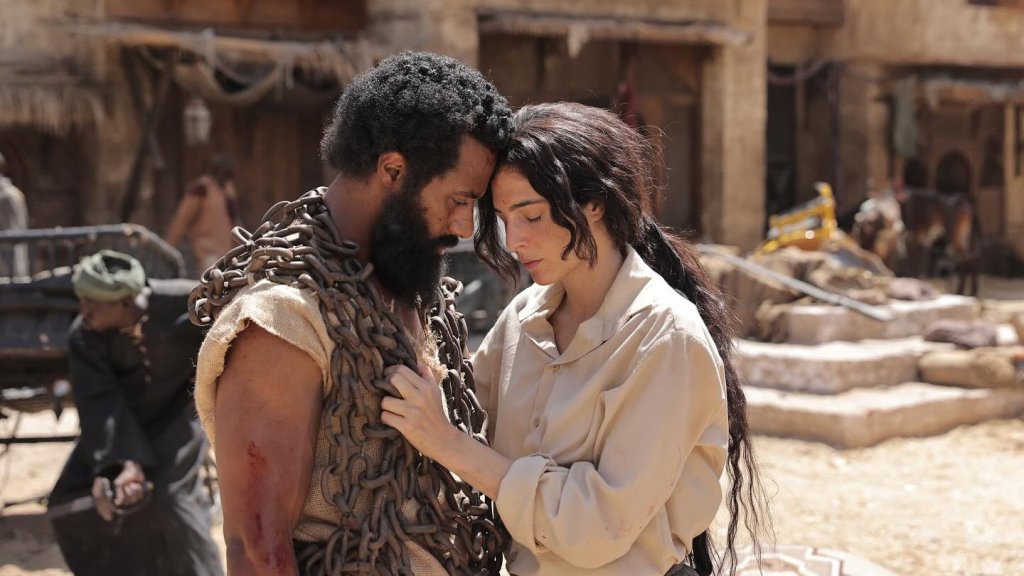
Asad is a beautifully done period piece directed by Mohamed Diab, starring Mohamed Ramadan and Razane Jamal as Asad and Laila respectively. Also written by Diab alongside Sherine Diab and Khaled Diab, the film ties itself well in its characterization, story, and visuals.
The film centers around Asad, a man seeking freedom from slavery. In that quest, he faces many challenges and obstacles to the end as he inspires those around him to fight for their liberation. Mohamed Ramadan did a great job in this role, and I hope to see more of him in films like this.
Laila is the heart and soul of the film, as she fights for Asad’s cause throughout the film without compromising on her principles. While Asad’s characterization was more around the physical and mental toll slavery and liberation from it does, Laila is the emotional point of the film. Asad is the oppressed attempting to be free, meanwhile Laila is part of the oppressor class and attempting to fix things in a society that is treating humans as worse than animals.
Complimenting the character work, is Hesham Nazih’s brilliant score. When the music takes over, the shot design is felt nicely as it moves with it. It is removed from the struggles of the previous scene, and into exaggerating the bare breadcrumbs of joy Asad gets to feel. It has many moments- some being happy, others sad, on extreme ends both ways. Hesham Nazih is a composer I always tend to enjoy like with “Kira & El Gin” (2022), “Moon Knight” (2022), and last year’s Grand Egyptian Museum opening score. This film is no different in that, I’m glad to see his talent across realms.
The most important part is of course in its creating the sense of space in which the characters inhabit. From the city, to the natural beauty of grasslands, and indoor worlds, the visuals of the film are masterfully done in its set design, shot composition, coloring, and lighting.
Conclusion

★ ★ ★ ★ ★
All in all, “Asad” (2026) is a great film in its visuals, character-work, and storytelling.

 MOSTAVENE